About the Artist: Jack Darcus
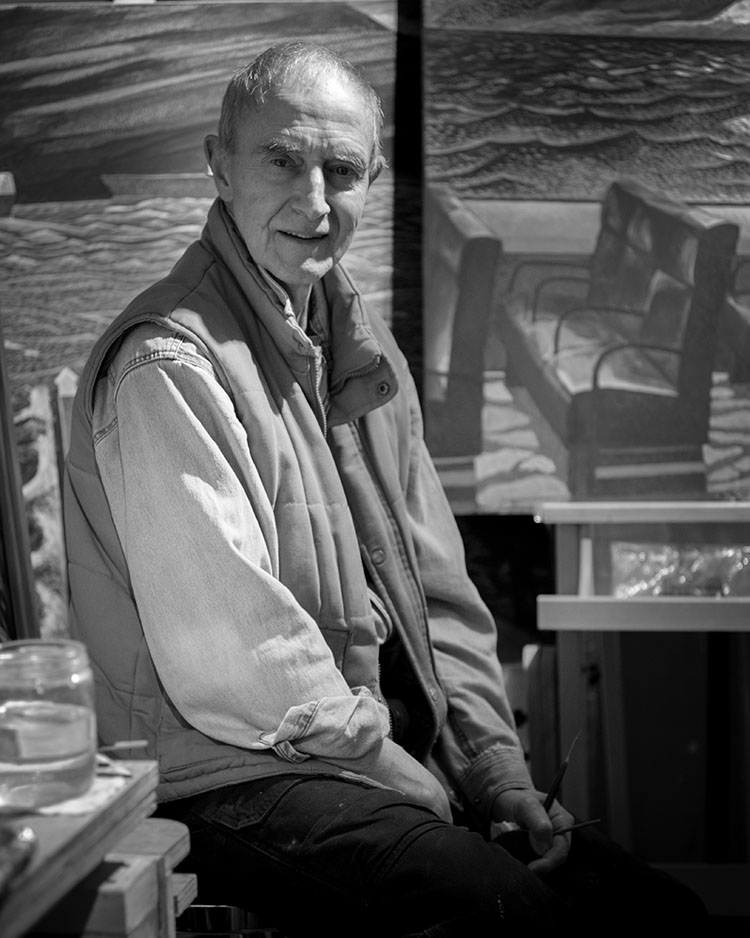
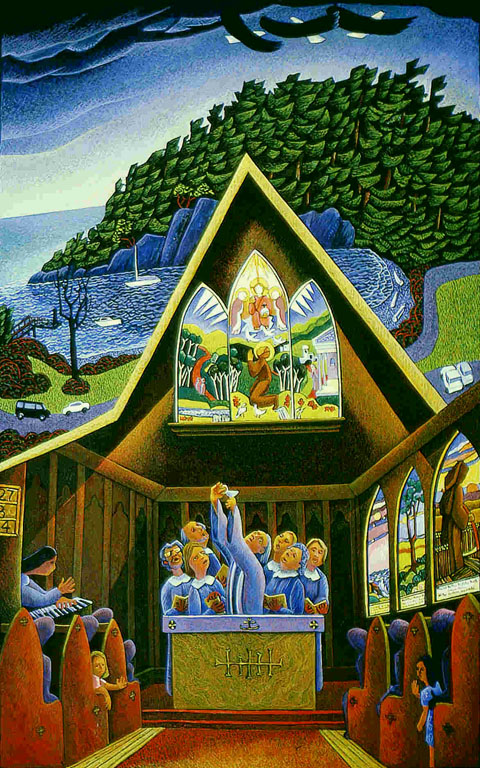
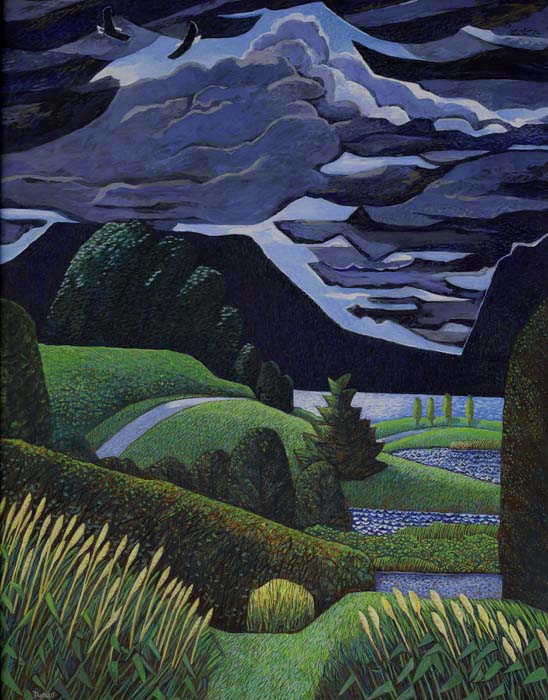
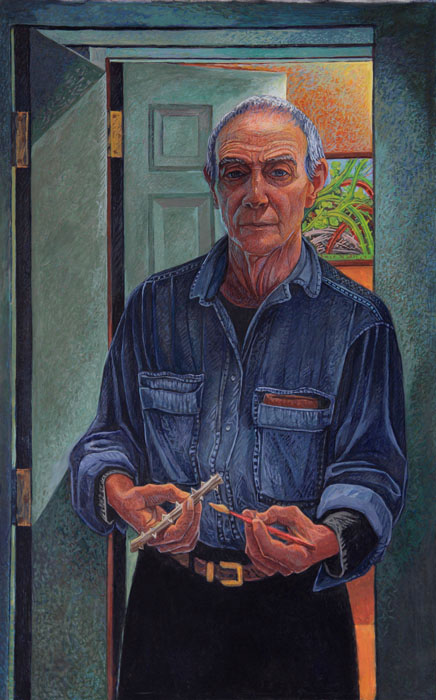
Jack Winston Darcus (born February 22, 1941 in Vancouver, British Columbia, Canada) is a Canadian film director, screenwriter and painter. A contemporary of Robert Davidson, Michael Ondaatje and other groundbreaking Canadian artists and visionaries, Jack has been painting and exhibiting art in Canada and Europe since 1964. Between 1969 and 1997, Jack also wrote, directed and produced eight feature films with screenings at a range of international film festivals, including Edinburgh, Cannes and Sundance.
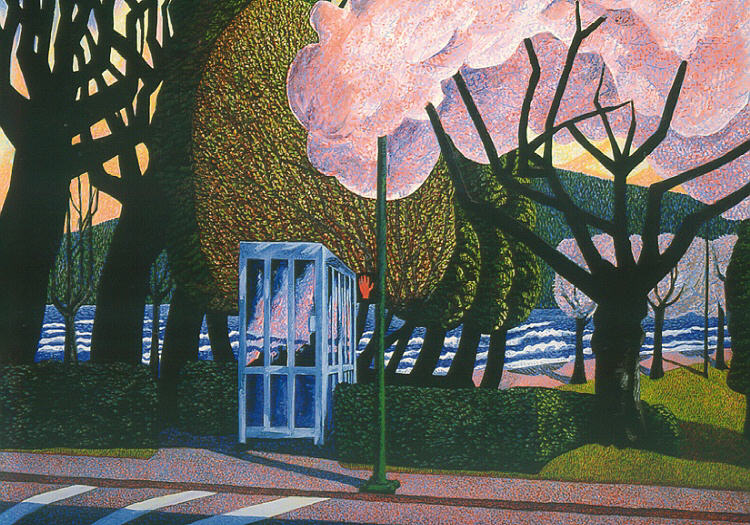
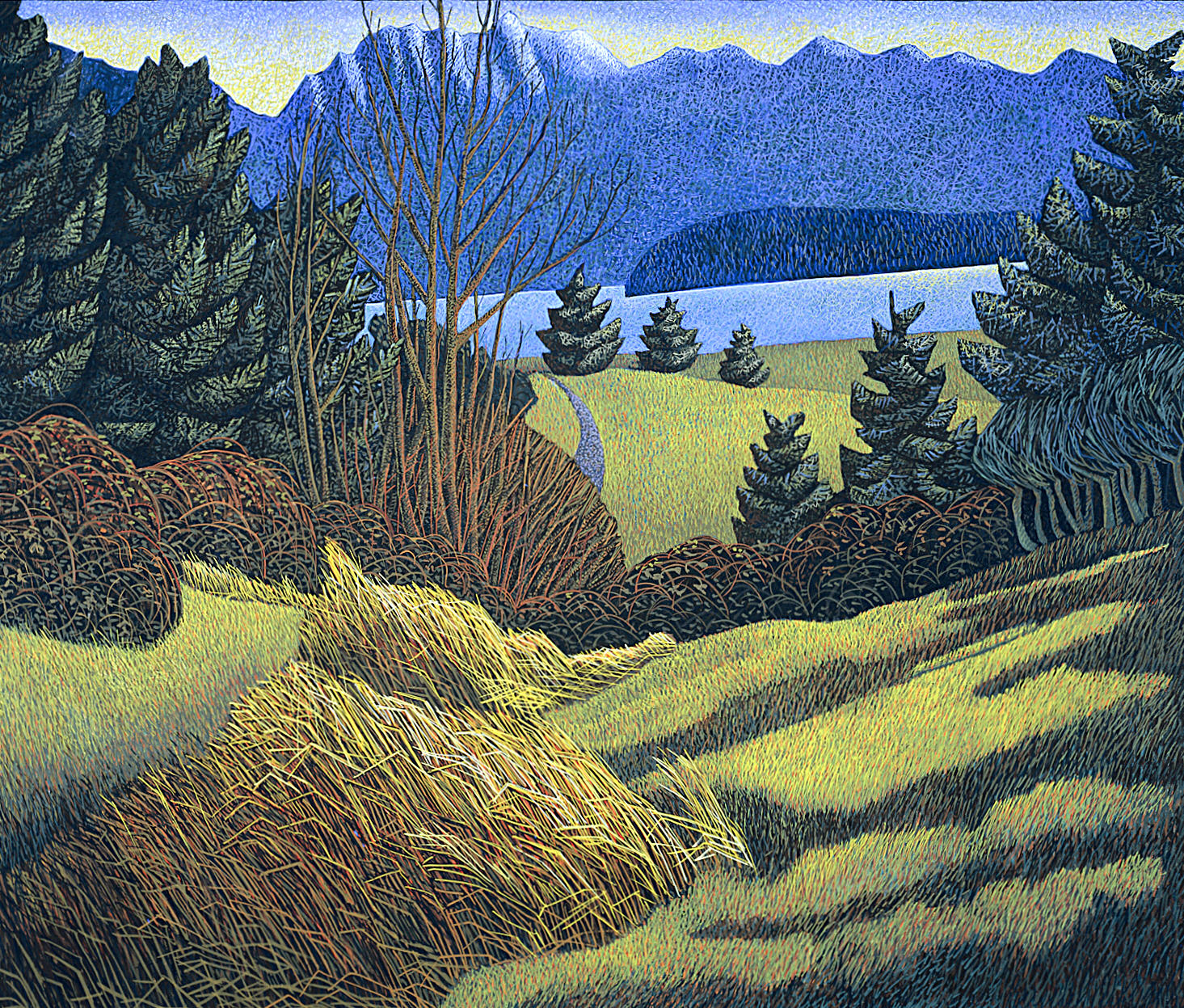
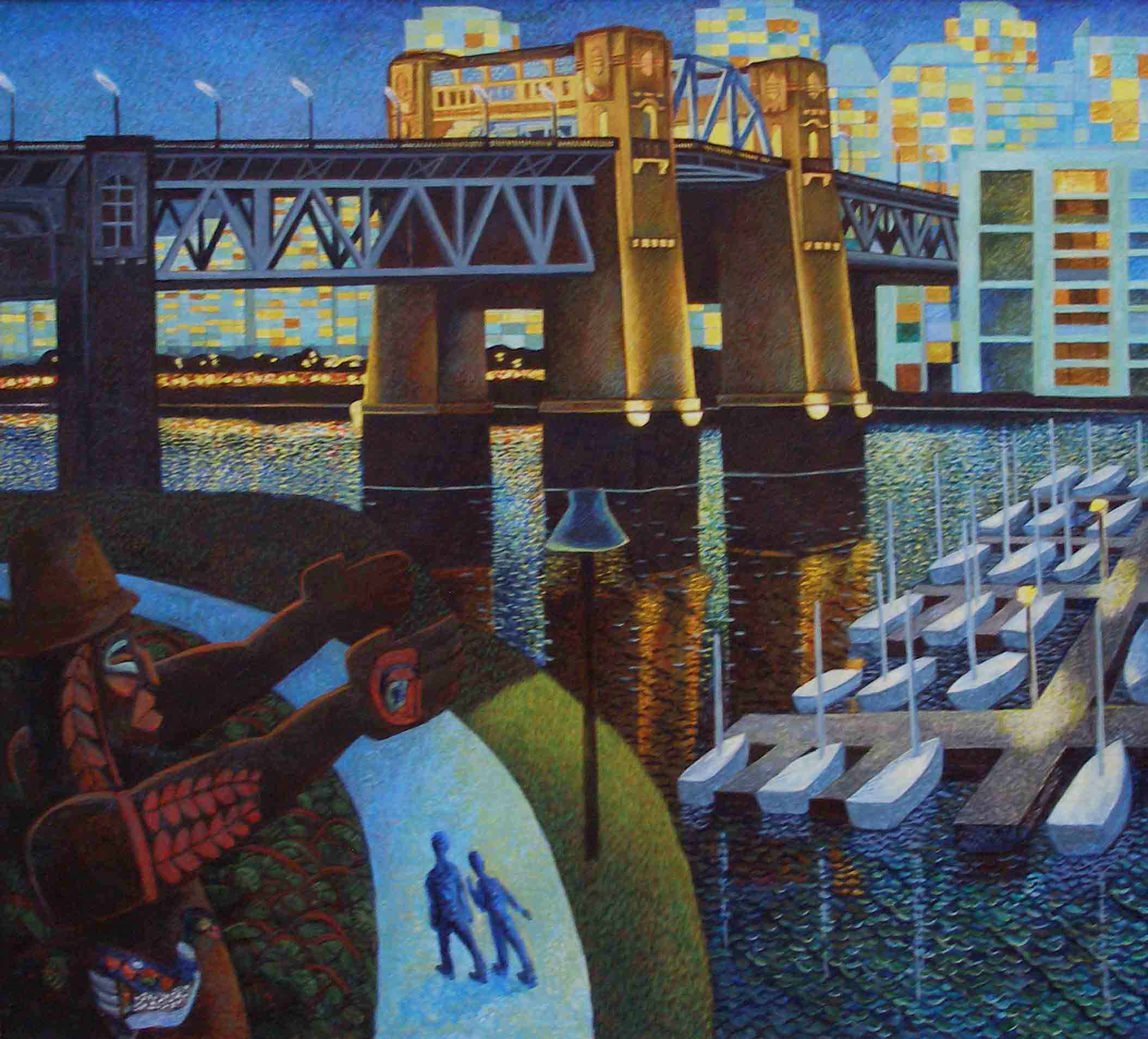
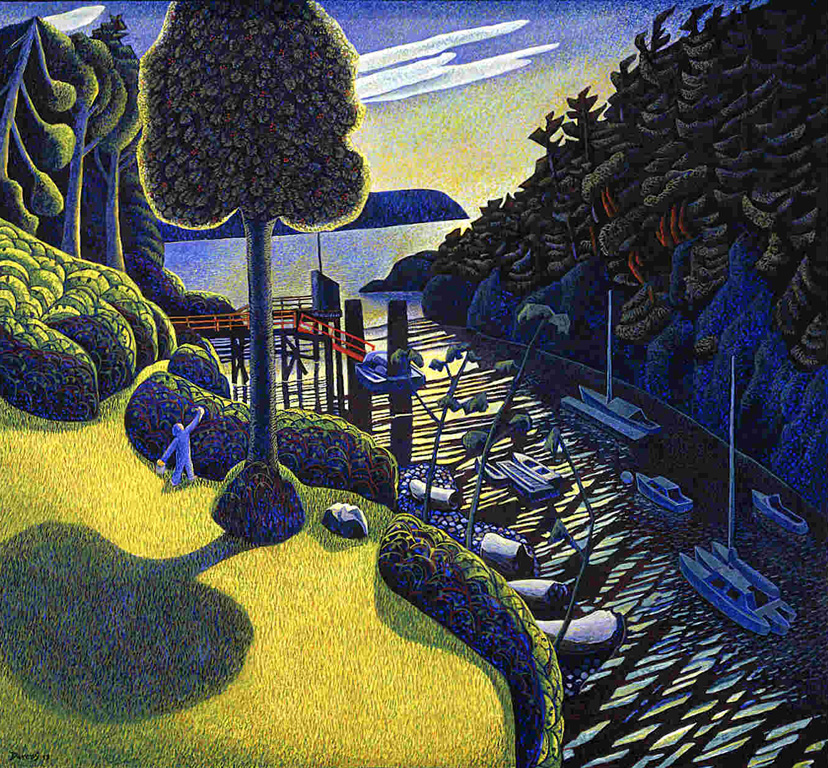
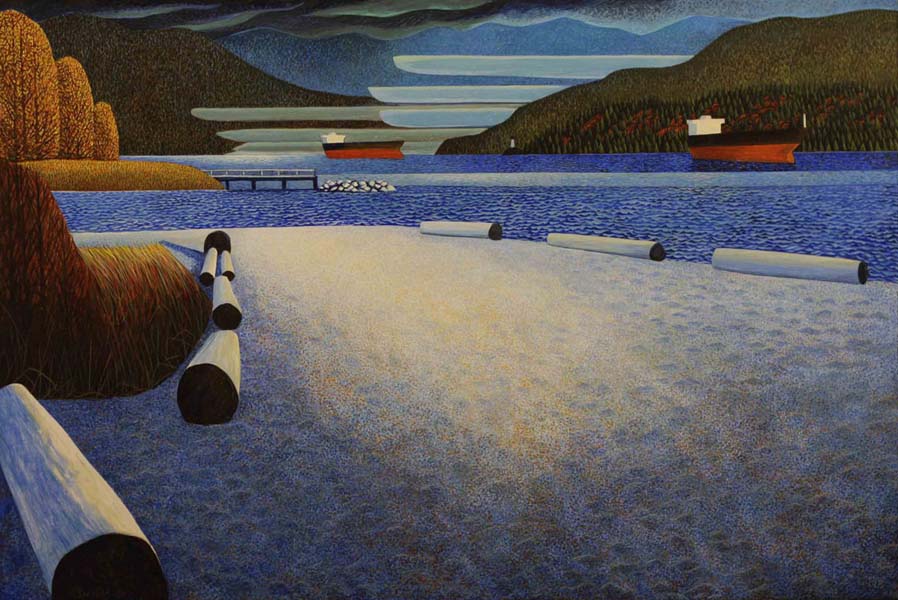
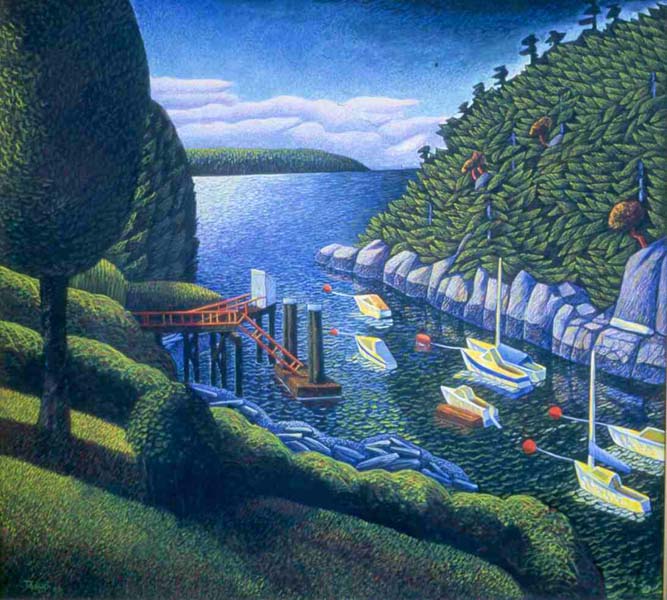
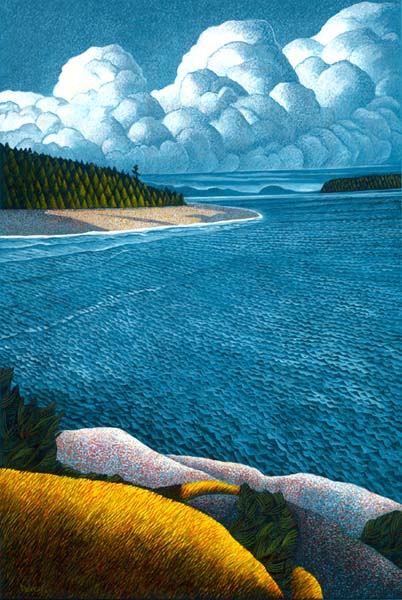
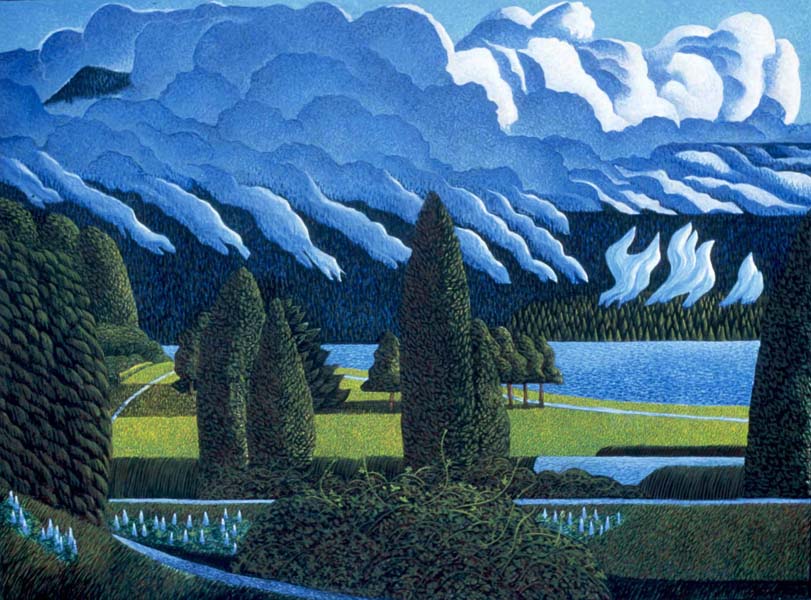
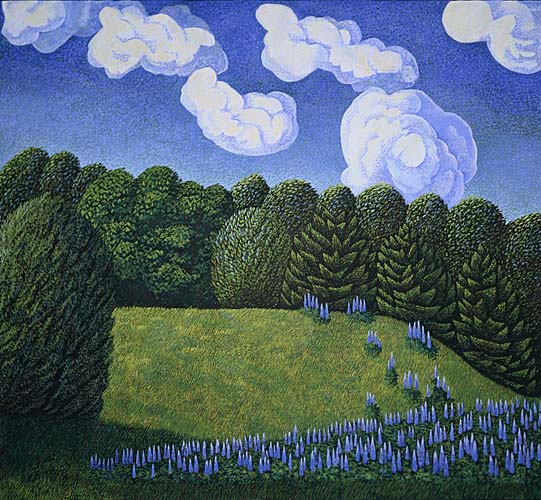
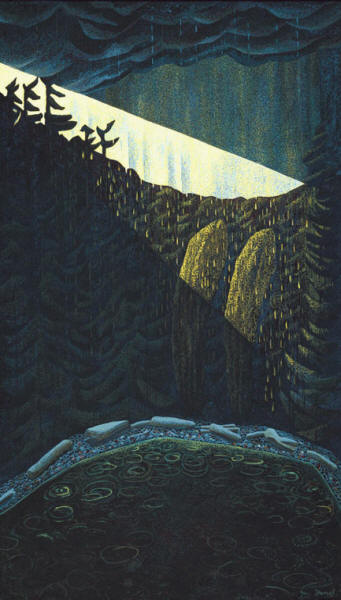
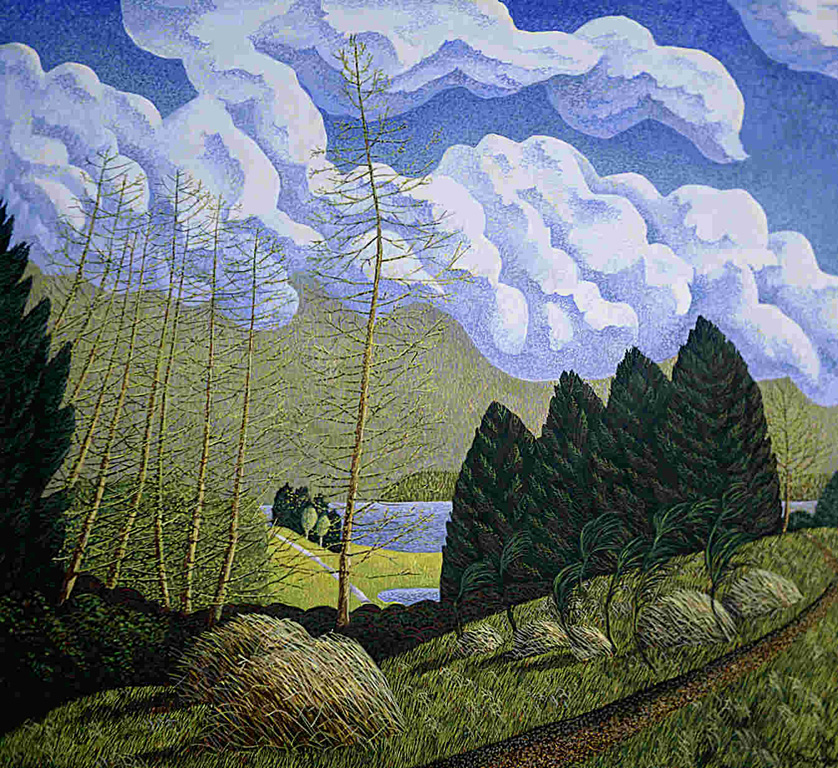
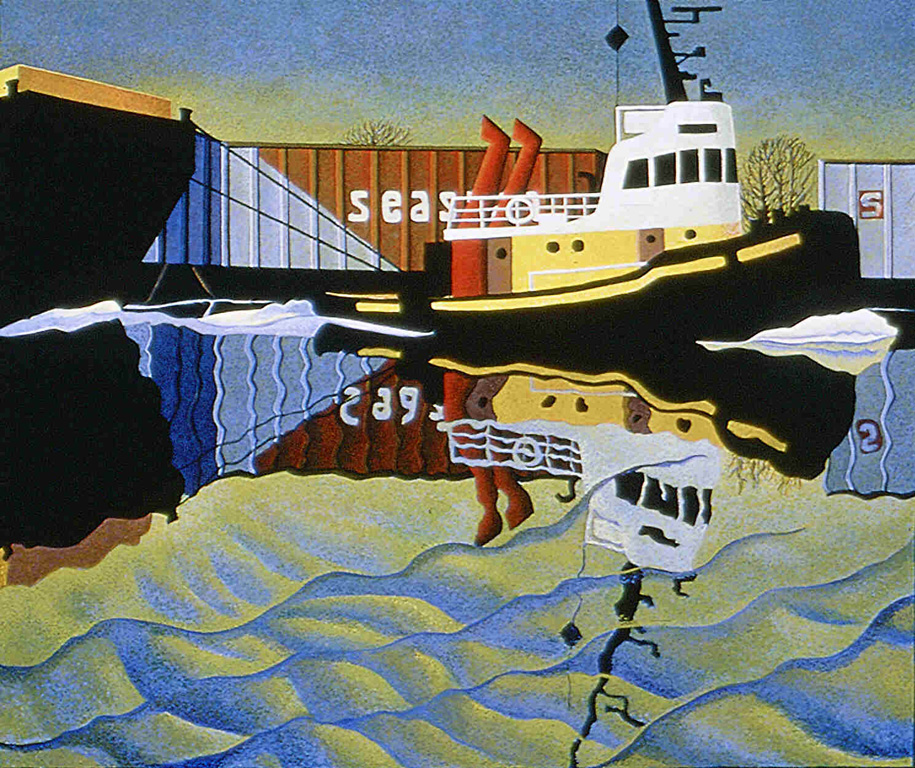
Today, Jack’s painting works are represented in collections around the world, including in Canada, the United States, Asia, and Europe. He continues to work primarily in egg tempera, the medium he loves best, and he continues to make and exhibit art at his painting studio and gallery (Darcus Gallery) on Granville Island in Vancouver, British Columbia.
“In 1963, I graduated from the University of British Columbia (UBC) with an arts degree in Art History and Philosophy. I had also taken teacher training courses in UBC’s Faculty of Education. I then taught adults in night school classes, which allowed me to paint during the days. One of my students was Myrtle Erickson, the mother of Arthur Erickson, the great architect.
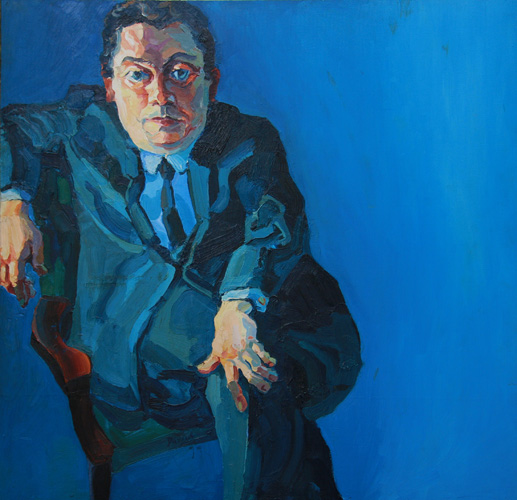
In those years, I lived in a house slated for demolition (very low rent) and painted in the living room. I did many early oil paintings there, principally portraits. I invited the night school painting class to visit my studio and see my work. Then one Sunday, Myrtle Erickson drove into the yard. Her passenger was Lawren Harris, the founder and supporter of Canada’s Group of Seven Painters after the First World War.
I knew the story of the Group of Seven and thought of Harris as a great painter. He was, to my young eyes, frail and very old.
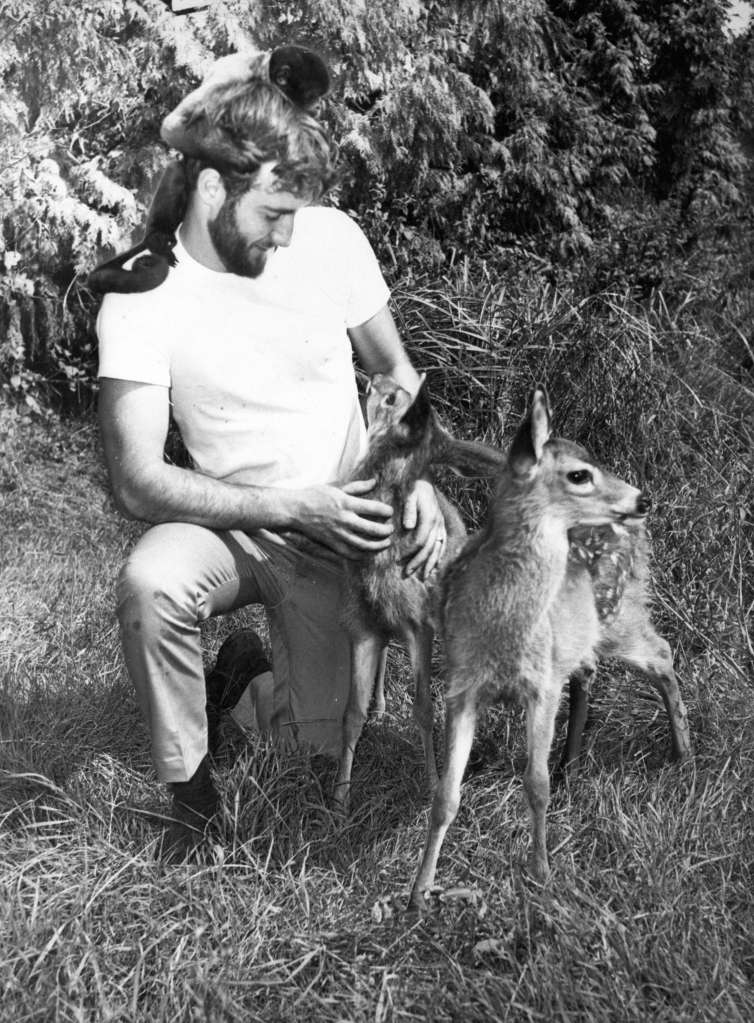
While living in that house, I also had taken the job, thanks to Alan Best, a zoo curator, of looking after all the birds of prey that came to the Zoo at Stanley Park. I had practiced falconry before my university years, and the yard was dotted with (usually) 18 eagles and owls tied by leashes to perches. They were accident victims that I would release when they had healed. I fed them with supplies from the zoo. And, in my living room, there was a small screech owl, with one blind eye, perched on one of my paintings. It was at home there.
I showed Lawren Harris the birds in the yard and invited him into the house where I quickly set out all my recent paintings. Myrtle Erickson had been there before and had explained things to him. But then he discovered the one-eyed screech owl that I had named “Robbie” (after Robert Creeley, the American poet, who was also missing an eye). Harris was fascinated by Robbie. He bent down very closely to look at him. That worried me. Robbie wasn’t to be trusted. He had already grabbed someone by the nose when they got too close to him. Thankfully Myrtle Erickson called him away to look at my paintings.
Harris did a quick tour of the room and pointed at two of them. Myrtle Erickson said, “We would like to buy those.” I said I would frame them and was instructed to deliver them to Harris’ home.
Two weeks later I went to Lawren Harris’ home in a very beautiful place overlooking the ocean to the North Shore. I then met Bess Harris, Lawren Harris’s wife. I received a cheque for my paintings and was given a tour of the house. Harris had an easel set up in the living room, with a painting he was working on. I was taken down to the basement where there were racks filled with paintings, sitting on sliders that rolled out. Harris began rolling out paintings by Tom Thomson, Arthur Lismer, Frederick Varley, J. E. H. Macdonald. Great paintings. I was in awe. And very grateful.“
Early Influences
“In the earlier years, before university, when I was still in high school, I had a studio in the backyard garage. I went to galleries and tried doing what I saw other painters doing. There were a great number of other painters who were very helpful to me. Roy Kiyooka was one of them.
Roy had a studio on 4th Avenue in Vancouver. I admired his work on large canvases, abstract paintings. I tried doing what he did. Then I invited him to come to my studio in the backyard garage. I picked him up and drove him there, showed him my works. He said kind things about them. Then I took him into the house to meet my mother. And in the house, he saw my other paintings: landscapes and portraits. I hadn’t planned to show him those.
To my surprise, he liked them much more than my recent “modern” works. Roy said, “These are you, do more of these!”
That was a great painting lesson.”
Other Influences and a Philosophy of Art
“When I was at university, I met Bill Reid and visited his studio down on Pender Street. There was a young man there named Robert Davidson. Thanks to meeting Bill, I began making jewelry in silver, gifts for Christmas. And again, I learned a lot about the First Nations history. I went to the Queen Charlotte Islands in 1969 when Bob carved and raised the first pole in living memory. Bill Reid started a renaissance in First Nations’ works and Robert Davidson has continued it. I consider myself incredibly fortunate to have grown up as an artist alongside artists like Bob and Bill, and to see them explore and develop their crafts.”
“Thirty-five years ago, when I turned fifty, I arrived at a simple truth that worked for me. Art is an answer to life. My answer was to see things, things I wished to keep. And paint the feelings I felt when they grabbed me. It was very simple then. I had to pay attention and value what I saw. And keep my craft in good shape.”
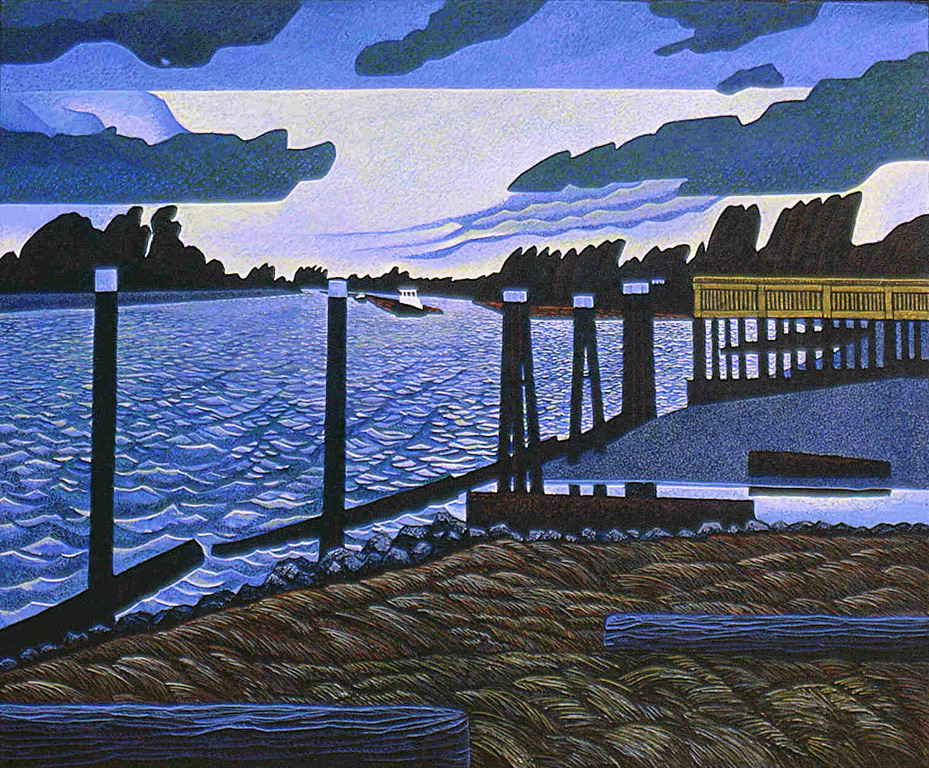
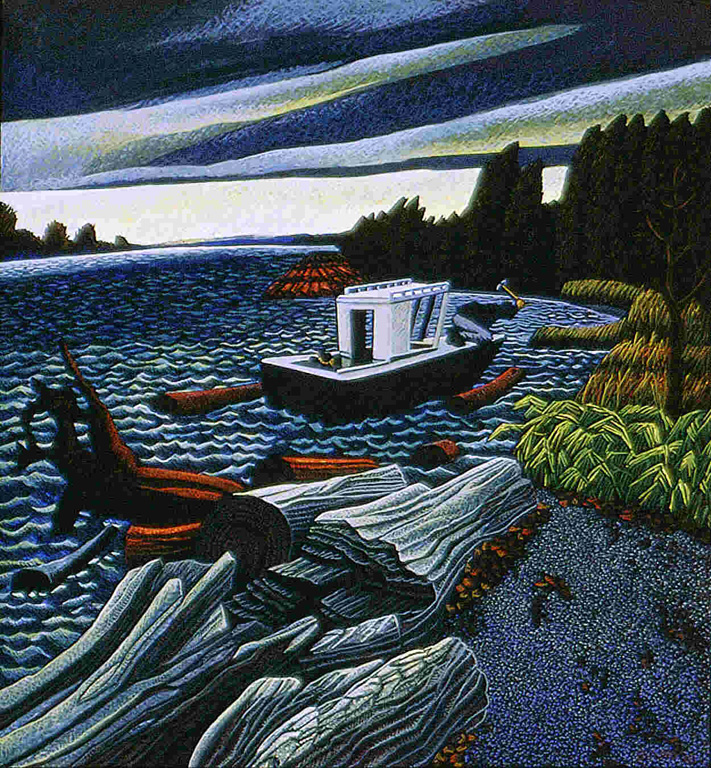
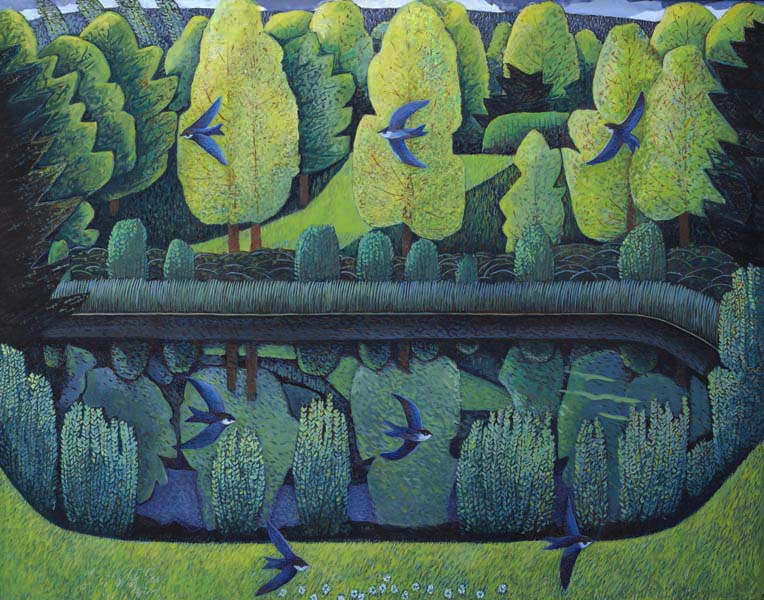
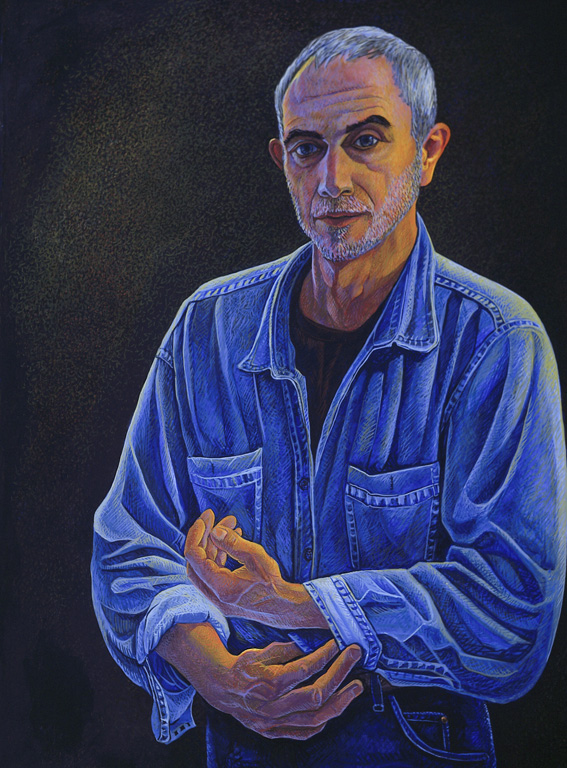
Artist’s Notes on Egg Tempera
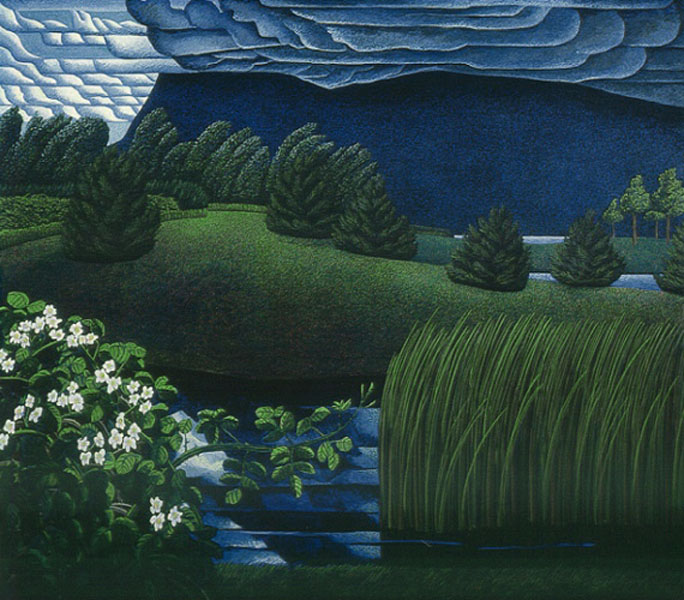
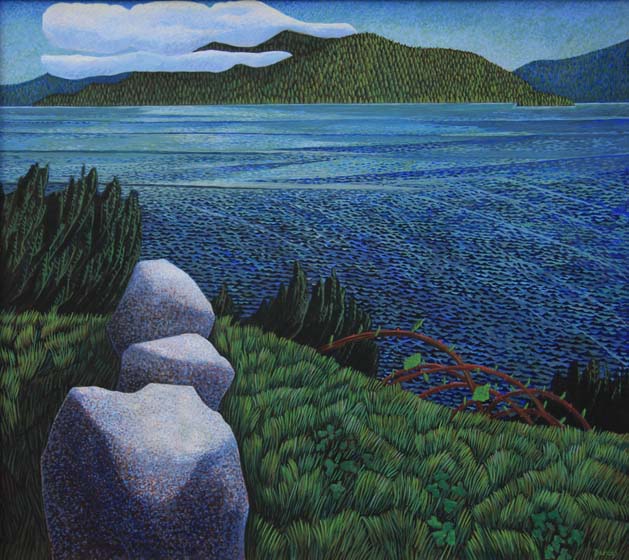
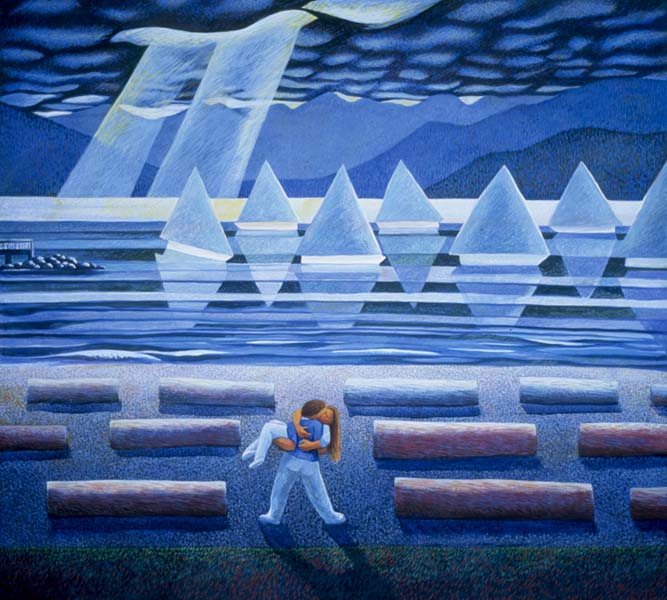
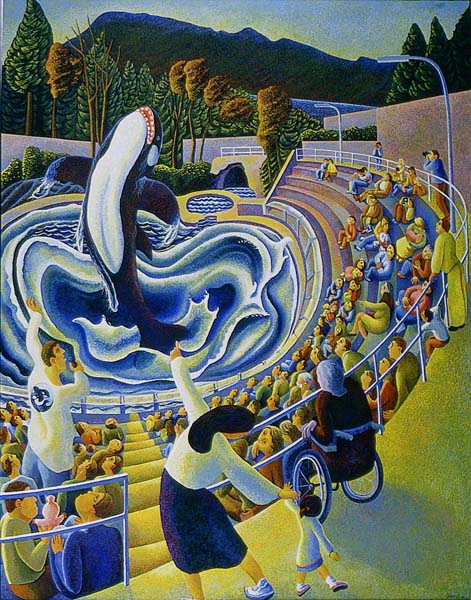
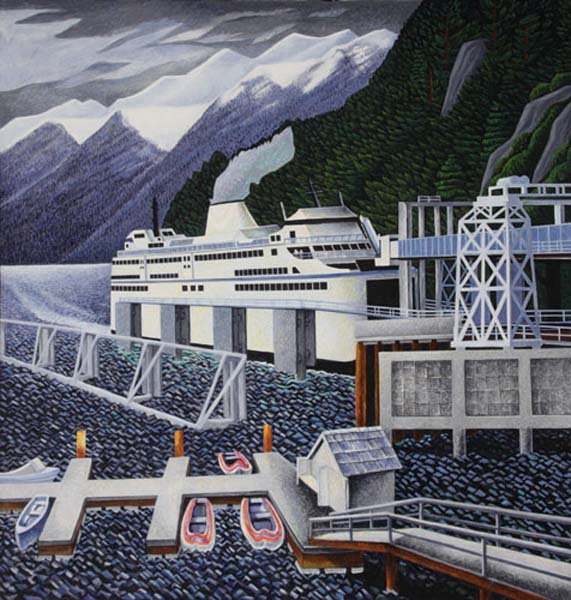
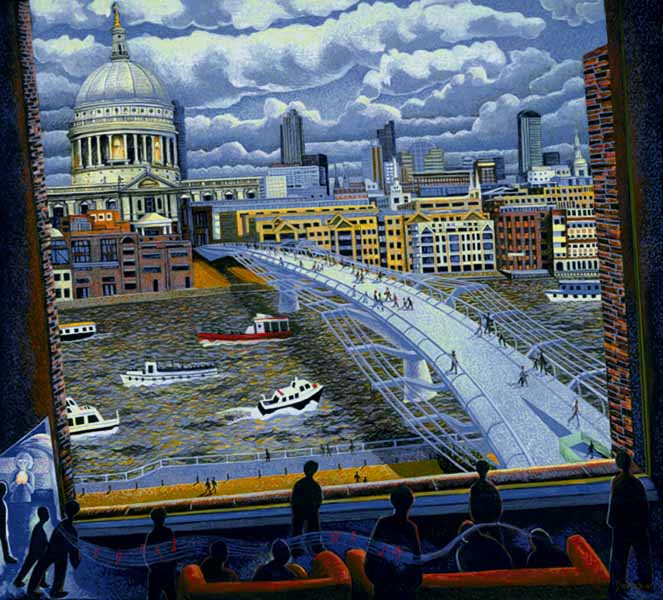
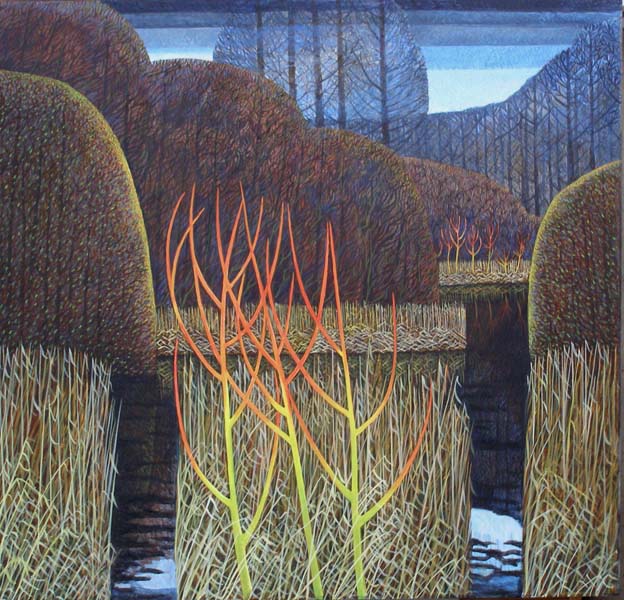
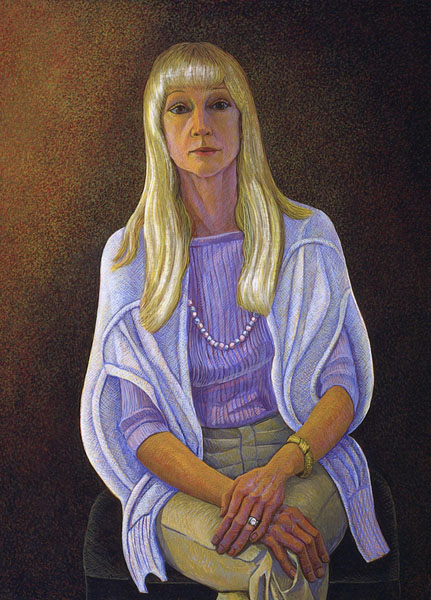
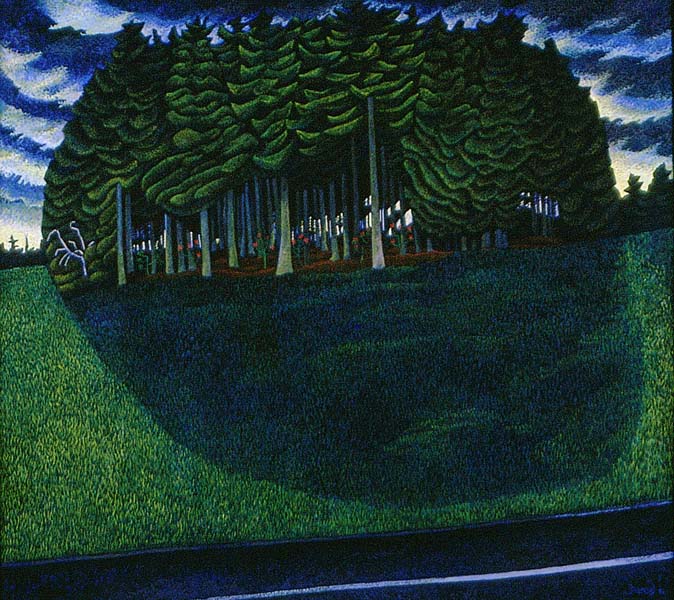
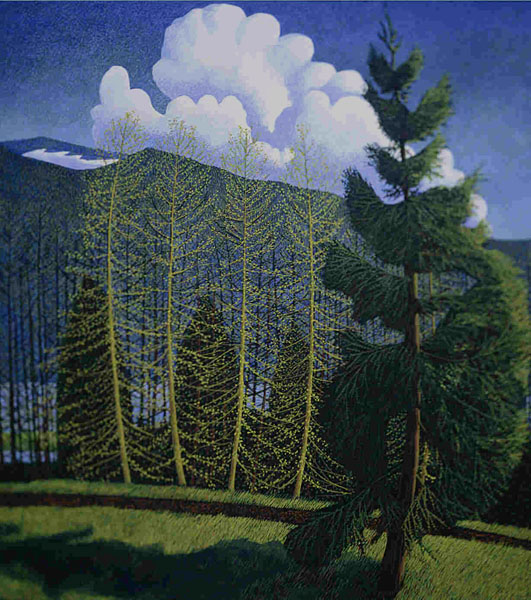
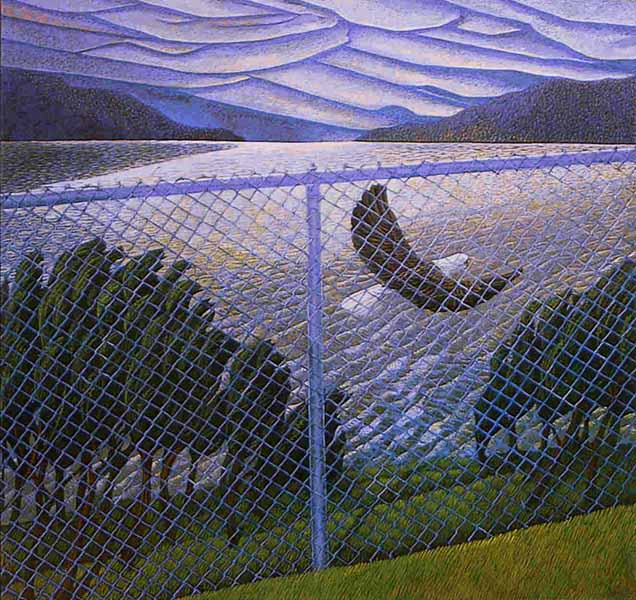
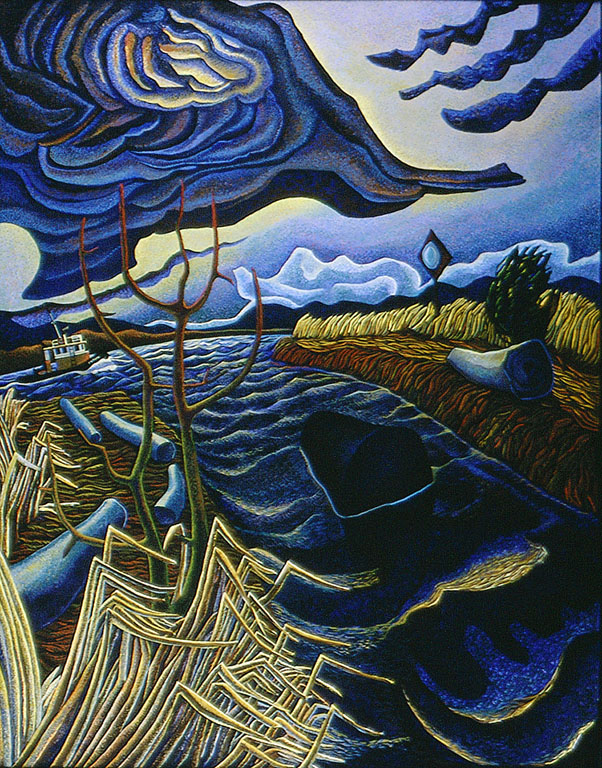
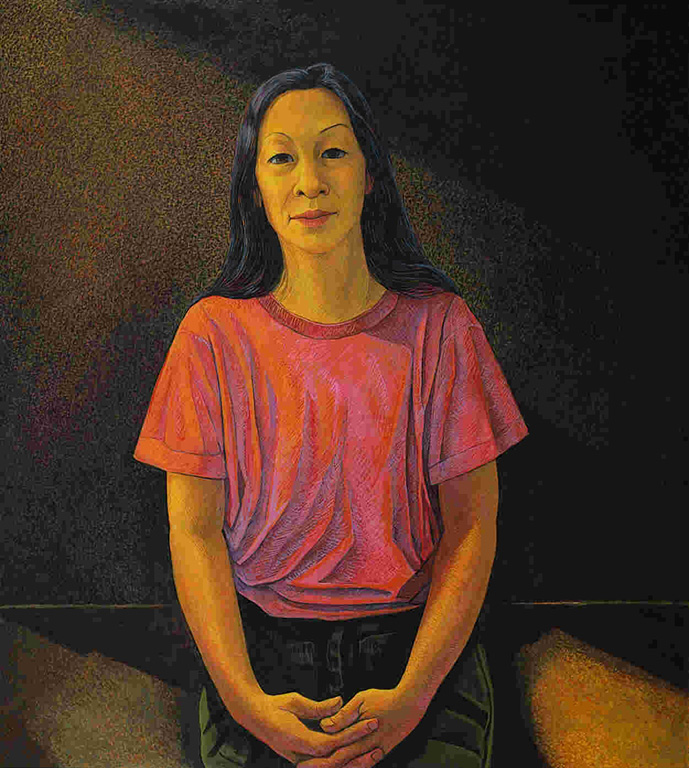
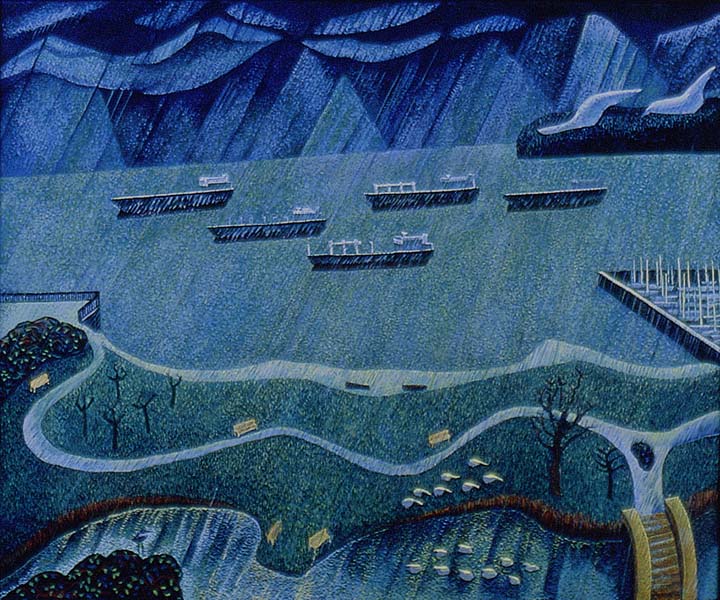
Egg tempera is one of the earliest mediums used to bind colours to a surface. Until the introduction of oil painting in the middle of the 14th Century, egg tempera was the principal medium used for painting. There are various formulae in the books on the subject, some involving the use of the whole egg, combined with water, varnish, and linseed oil, in varying proportions. I experimented with these when I began working with the medium in 1978. After reading Cennini’s 15th century book “The Practice of Tempera Painting” (Dover Publications, Translated by D.V. Thompson), I simplified my materials to egg yolk, water, and pigments. All pigments are mineral-based, and are light-fast and non-fugitive.
Egg yolk is a natural emulsion of oils and water, which dries clear, and remains elastic. It is tremendously tough. (Old housepainters used to add egg yolks to oil-based enamels, to toughen the paint on counter-tops!) From all reports it is more durable than linseed oil. Certainly all early tempera works I have seen in European Galleries are in beautiful shape. In fact, it was a Botticelli painting in the National Gallery in London, England, that caused me to begin learning the craft of using it.
Egg yolk dries immediately to the touch, but takes six months to oxidize fully. After the oil in the medium is fully dry the paint is waterproof, and brittle. This is the reason for painting on panels, as a stiff ground prevents cracking with humidity changes. (An oil painting takes twenty years to fully dry, after which it too is brittle, and will crack with humidity changes if painted on canvas that is poorly mounted on a stretcher.) Most of the Renaissance paintings were done on wood panels, or on canvases with up to ¼ inch of gesso surfacing. The gesso ground under these paintings is also of traditional materials: rabbit-skin glue, calcium carbonate (chalk), titanium white pigment, and a small amount of boiled linseed oil.
History of painting exhibitions
(All shows are solo exhibitions unless otherwise noted.)
1963 | Arts Club of Vancouver
1964 | Young Contemporaries, London, Ontario (Juried Group Show)
1964 | Canvas Shack Gallery, Vancouver, B.C.
1966 | Bau Xi Gallery
1974 | Victoria Art Gallery (Juried Group Show), Victoria, B.C.
1976 | Bau Xi Gallery, Victoria B.C.
1976 | University of British Columbia Art Gallery, Vancouver, B.C.
1976 | Upper Street Gallery, London, England
1978 | Centre Culturel Columbien, Vancouver, B.C.
1980 | Queen Elizabeth Theatre, Lobby Show, Vancouver, B.C.
1981 | Keenleyside Gallery, Vancouver, B.C.
1987 | St. Francis in the Wood, Church Hall, West Vancouver, B.C.
1988 | Surrey Art Gallery, Surrey B.C.
1993 | Diane Farris Gallery, Vancouver, B.C. (Group Show)
1995 | Diane Farris Gallery
2005 | Omega Gallery, Vancouver, B.C. (Solo Exhibition)
2005- 2007 | Winsor Gallery (Works on Continual Exhibition)
2010 – 2011 | Winsor Gallery (Representation)
Heyden Beck Gallery, Whistler, B.C. (Works on Continual Exhibition)
2012 – 2014 | Granville Fine Art, Vancouver, B.C. (Representation)
Present | Ongoing exhibition of works at the artist’s studio and gallery
 DARCUS GALLERY